Use a dry rice label to log a cooked portion. Two real labels and a worked meal-prep example show what to weigh, even after you pack the first bowl.
If your rice label gives a dry serving weight, weigh the rice before cooking. If you want to weigh the rice on your plate, you can still use that label. Record how much dry rice went into the pot and what the whole batch weighs once cooked. Your bowl gets the same share of the batch’s calories and carbohydrates as its share of the cooked weight.
Two products from the same brand show why the word cup can be confusing.
| Product | What the label measures | What to enter |
|---|---|---|
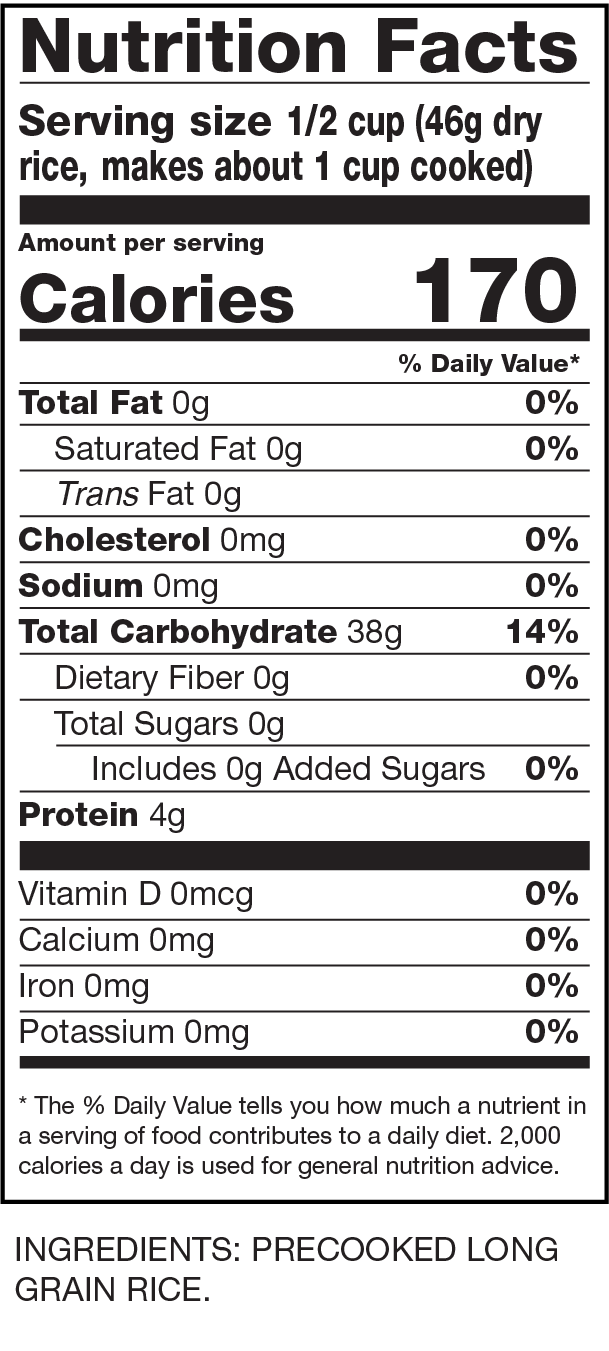
| Minute Instant White Rice, boxed | 46 g of dry rice, listed at 170 calories and 38 g carbohydrate. The label also gives an approximate cooked yield of one cup. | Use 46 g if you weighed one serving dry. The cooked yield describes how much rice to expect on the plate. |
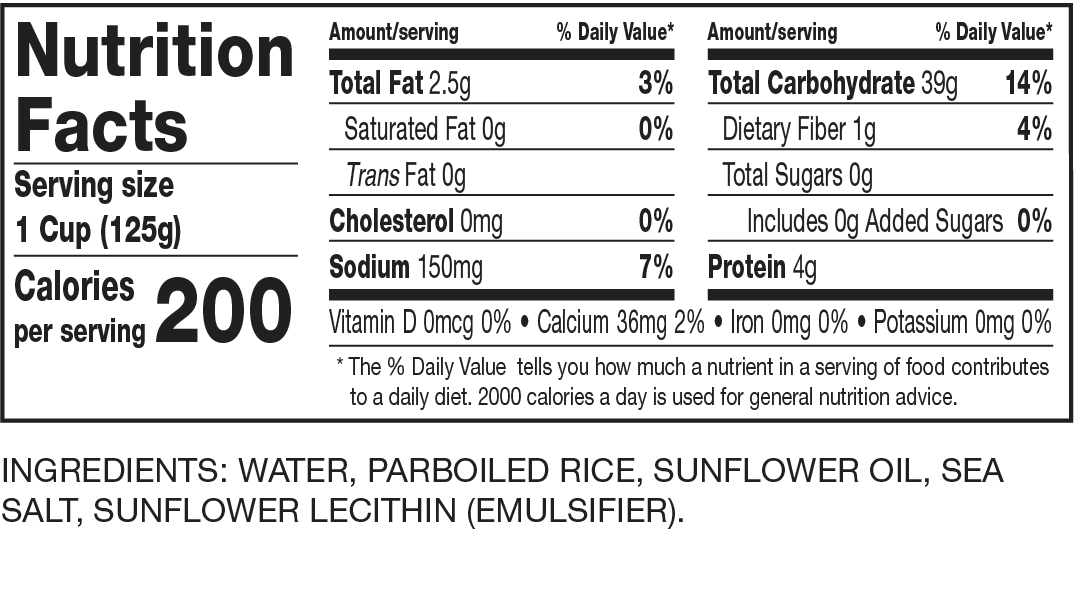
| Minute White Rice Cups, ready to serve | One 125 g container of fully cooked rice, listed at 200 calories and 39 g carbohydrate. The ingredients include sunflower oil. | If you eat a whole container, enter one serving of this product. It already includes the oil. |
Look for the serving weight and preparation wording on your own package. Here, both products have been cooked during manufacture, but the boxed rice is dried again and takes up water in your kitchen. Boxed rice label · Ready-to-serve cup label
Suppose you weigh 184 g dry from the box above, then cook it in plain water. That’s four label servings, or about 680 calories and 152 g carbohydrate in the pot. Transfer all the rice to a bowl you’ve zeroed on the scale. For this example, suppose it weighs 520 g cooked. Your batch might weigh a different amount.
| What you packed | Cooked weight | Share of this batch | Estimated calories | Carbohydrate |
|---|---|---|---|---|
| First lunch | 195 g | 195 ÷ 520 = 37.5% | 255 | 57 g |
| Remaining rice | 325 g | 325 ÷ 520 = 62.5% | 425 | 95 g |
For that first lunch, you could enter 1.5 servings of the dry product in your food log. That’s the same calculation as 37.5% of four servings. Save the batch as a recipe if your app accepts a finished weight. If you stirred in oil or butter, include it in the recipe total before dividing. Log toppings separately when they vary from bowl to bowl.
If both portions are still on the counter, you can recover the batch weight. Weigh the rice in each container, subtract each empty container’s weight, and add the rice weights. In the example, 195 g in the lunch box plus 325 g left in the pot gives you the missing 520 g. A portion weighed before it was eaten works too, provided you can account for the rest of the batch at the same stage.
If a bowl is gone and you never weighed it, the leftovers alone can’t tell you their share of the original pot. Use a food-log entry for cooked rice that matches what you served, and record any known additions. Weigh the full batch next time if you want to use the dry label. A generic cup conversion can only estimate your yield. The USDA’s grain guide, for example, lists different approximate cooked volumes for regular and instant long-grain rice. USDA Food Buying Guide, grain yield tables
If you also want a daily target to compare with your meal log, the site’s calculator estimates calories and macronutrients from your activity and goal. Macro calculator
Powered by BTST